
Understanding Foreseeability in Florida Slip and Fall Cases and Its Role in Establishing Liability

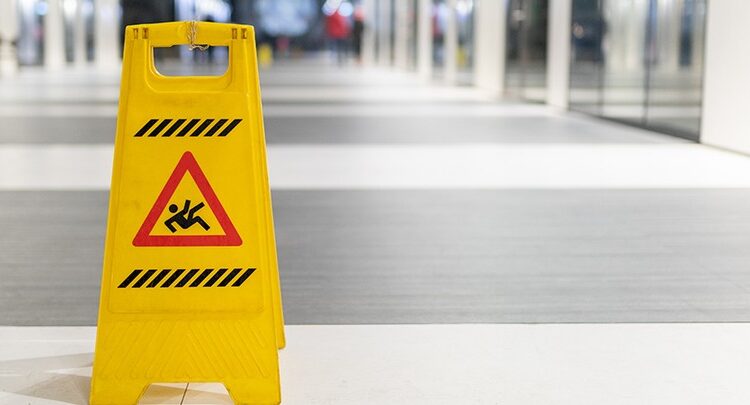
Foreseeability is one of the most critical concepts in Florida slip and fall law, yet it is often misunderstood by injured individuals and underestimated by businesses. While many people think slip and fall claims revolve solely around whether a spill existed or whether an employee failed to act, the deeper legal question is whether the business could and should have anticipated the hazard before the injury occurred. Foreseeability bridges the gap between accident and negligence. It transforms an unpredictable event into a preventable one. Law firms such as Chalik and Chalik, which represent injured individuals exclusively, rely heavily on foreseeability analysis to demonstrate that property owners failed to uphold their legal obligations.
Under Florida Statutes §768.0755, injured individuals must show that the business had actual or constructive knowledge of a hazardous condition. Actual knowledge refers to what the business directly knew, while constructive knowledge refers to what the business should have known had reasonable care been exercised. It is within this second category that foreseeability carries decisive weight. Constructive knowledge can be established by demonstrating that the hazardous condition existed for a length of time sufficient for the business to discover it or that it occurred with such regularity that it was foreseeable. In practice, many cases hinge not on eyewitness accounts but on the predictable nature of the hazard itself.
For example, spills are common in high-traffic supermarket produce sections, where misting systems, customer handling of items, and condensation from refrigeration units create recurring moisture problems. Courts evaluate whether businesses should expect such hazards to appear throughout the day. This evaluation is not merely theoretical; it draws from real litigation patterns discussed in Publix slip and fall cases, where the predictability of produce section hazards frequently becomes central to liability arguments. When a hazard is recurring, businesses are expected to implement preventative systems, perform more frequent inspections, and maintain heightened awareness.
Foreseeability also influences how courts assess environmental conditions. Florida’s climate creates unique risks, including sudden rain showers that result in water being tracked into entryways. Businesses cannot claim ignorance of these weather-related hazards. A wet entrance during a storm is not a rare or unexpected event—it is an anticipated condition that requires immediate action. Proper mats, continuous monitoring, frequent cleaning, and adequate signage are essential. When businesses fail to take these steps, they effectively ignore foreseeable conditions inherent to operating in Florida.
Another area where foreseeability plays a key role is in evaluating store design and layout. Certain flooring materials, such as polished tile or glossy stone, become extremely slippery when wet. Businesses that choose such materials must anticipate how they will behave under typical operating conditions. If the business is aware that moisture regularly accumulates in specific areas—whether through spills, condensation, or customer traffic—then it must adopt reasonable steps to minimize risk. Courts consider whether these conditions were predictable and whether the business acted responsibly in addressing them.
Inspection procedures serve as another lens through which foreseeability is evaluated. Businesses that perform inspections infrequently, inconsistently, or without reliable documentation may struggle to argue that they exercised reasonable care. In high-traffic environments, hazards appear rapidly. Courts expect businesses to anticipate this and adjust inspection frequency accordingly. Large retailers often present inspection logs to demonstrate diligence, yet these logs are scrutinized closely to determine whether they reflect genuine preventative oversight or mere formality. This issue frequently arises in litigation involving national chains, including disputes documented in Walmart slip and fall cases, where inspection records are often pivotal.
Foreseeability also extends to employee training. Businesses cannot expect employees to identify or correct hazards they are not trained to recognize. If staff members are not taught how to spot condensation, react to spilled liquids, or monitor high-risk areas, then hazards will inevitably go unnoticed. Courts evaluate whether businesses provided adequate instruction, not merely whether employees were present in the area. Poor training reflects a failure to anticipate predictable dangers and often supports a finding of negligence.
One of the most misunderstood aspects of foreseeability involves temporary hazards. Businesses often argue that a spill occurred moments before the fall and that no reasonable opportunity existed to address it. While sudden hazards do occur, many Florida slip and fall cases reveal that these conditions were not as sudden as businesses claim. Footprints through the spill, cart tracks, or expanding liquid patterns may indicate that the hazard existed long enough for the business to have discovered it. Surveillance footage can further disprove claims of suddenness. In many cases, the hazard’s characteristics alone demonstrate that it was not a fleeting event but a foreseeable and preventable risk.
Ultimately, foreseeability helps courts determine whether a business took reasonable steps to protect visitors. It is not enough for a business to argue that the hazard was unexpected. The question is whether the hazard was predictable given the environment, operating conditions, and history of similar incidents. For slip and fall victims, understanding foreseeability provides clarity on why their injuries were not simply accidents but consequences of preventable oversight. Attorneys at Chalik and Chalik use foreseeability analysis to highlight preventable patterns, expose inadequate safety systems, and secure fair compensation for injured individuals under Florida law.